Published March 06, 2026 | By Alyx E, Founder of Collectors MD
Every March, Problem Gambling Awareness Month (PGAM) invites us to pause and take a closer look at behaviors that often hide in plain sight. The goal isn’t to shame people or cancel activities that bring joy. It’s to raise awareness about the risks, the warning signs, and the support systems that exist for those who need them. The 2026 theme, “Caring Communities, Stronger Futures”, reminds us that awareness and accountability don’t happen in isolation. They happen when communities are willing to have honest conversations about what’s really going on beneath the surface.
For many people, the word “gambling” immediately brings to mind casinos, sportsbooks, or poker tables. But over the past decade, many industries have quietly borrowed the psychological playbook that made those environments so powerful. Mechanics built around scarcity, urgency, variable rewards, and intermittent reinforcement have spread far beyond traditional gambling spaces. Collectibles are not immune.
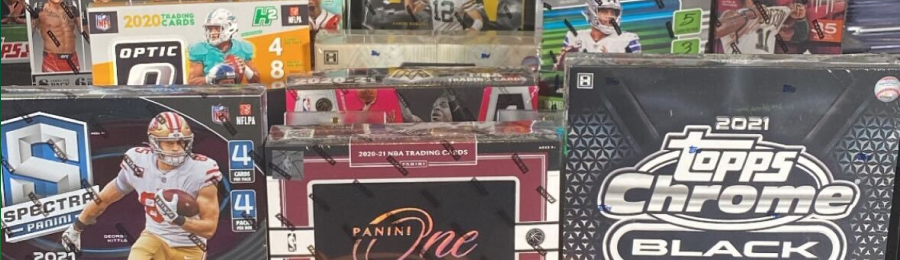
Across the collectibles landscape, we now see systems designed around chase mechanics. Limited parallels. Case hits. Lottery-style odds. Countdown timers. Live breaking rooms where thousands of people watch the same moment unfold in real time. Influencers and breakers hyping the possibility of the next “monster card”. Algorithms surfacing the biggest hits and the loudest wins across social media.
The experience becomes less about the card in your hand and more about the possibility of the one you might pull next. And the truth is, these systems work extremely well at driving engagement.
Industries have learned from casinos and sportsbooks that unpredictable rewards create powerful behavioral loops. When someone occasionally hits something big, the moment spreads instantly across social media like wild fire. Screenshots. Clips. Reaction videos of breakers obnoxiously screaming on the top of their lungs. The entire community watching and thinking, “That could have been me”.
When those mechanics are paired with highly targeted marketing, constant access through mobile apps, and messaging that pulls on nostalgia and childhood memories, the line between collecting and gambling can become much harder to see. Especially for younger and more impressionable collectors who are entering these ecosystems for the first time.
That doesn’t mean collecting itself is bad. Far from it. Collecting can be joyful. It can be social. It can be meaningful. For many people, it’s a lifelong passion that connects generations of fans and families. But awareness matters.
The conversation around collectibles and gambling mechanics is uncomfortable for some people because it touches something personal. For many of us, collecting began as something pure. Childhood memories of opening packs, trading with friends, and feeling connected to the players and teams we loved. That nostalgia is real. But nostalgia can also become a powerful marketing tool when systems are designed to amplify excitement, urgency, and the fear of missing out. Awareness doesn’t take the joy away. It simply helps us understand the environment we’re participating in.
At Collectors MD, the goal has never been to cancel the hobby or shame people for participating in it. The goal is to help collectors understand the environment they’re operating in, recognize when behaviors may be shifting into dangerous territory, and make intentional decisions about how they want to engage.
That means asking real questions. Do breakers and platforms have a moral responsibility? Or is this entirely about personal accountability? The honest answer is that it’s both. Individuals are responsible for their choices – especially as adults. Personal accountability matters and it always will. But systems that are intentionally designed around urgency, scarcity, and constant access don’t get to pretend they’re neutral.
Platforms know what drives engagement. Breakers understand how hype influences behavior. When design choices intentionally reduce friction and increase impulse, responsibility doesn’t simply disappear because participation is technically optional.
We can ask individuals to take responsibility for their behavior and ask platforms and industries to acknowledge how their systems shape outcomes. Those two things are not mutually exclusive. They’re part of the same conversation.
That’s why Problem Gambling Awareness Month is so important. It gives us a chance to step back and talk honestly about the mechanics that influence behavior across many different industries, including collectibles. It also reminds people that help and resources exist.
Through Collectors MD, collectors now have access to tools, education, and peer support that didn’t exist even a few years ago. People can learn how these systems work, recognize warning signs early, and connect with a community that understands the unique challenges that come with modern collecting environments.
Awareness doesn’t ruin the fun. Awareness protects the people participating in it. When collectors understand the risks, recognize the mechanics, and engage with intention, the hobby becomes something healthier and more sustainable for everyone involved.
#CollectorsMD
Awareness doesn’t cancel collecting culture. It protects the people inside it.
—
Follow us on Instagram: @collectorsmd
Subscribe to our Newsletter & Support Group
Join The Conversation On Mantel
Read More Daily Reflections