Ken Griffey Jr. Cards: The Icon That Started It All
For an entire generation, Griffey was the reason to collect. His 1989 Upper Deck rookie launched a million collections — and still defines the hobby.
From the Community
Related posts from the Baseball Cards community on Mantel


Join the Ken Griffey Jr Cards Community
Share your collection, compare comps, browse live marketplace listings, track trends, and connect with collectors who care about the hobby and the market behind every card.
SLAM Scores & Marketplace
SLAM is a liquidity score from 0–100 that measures how easily a card can be bought or sold at a fair price. It combines recent sales data, trading volume, and market depth into a single number. Listings are aggregated from eBay and Fanatics Collect.
90–100 Cash
70–89 Liquid
40–69 Inventory
0–39 Collection
Collection
Buy it because you love it
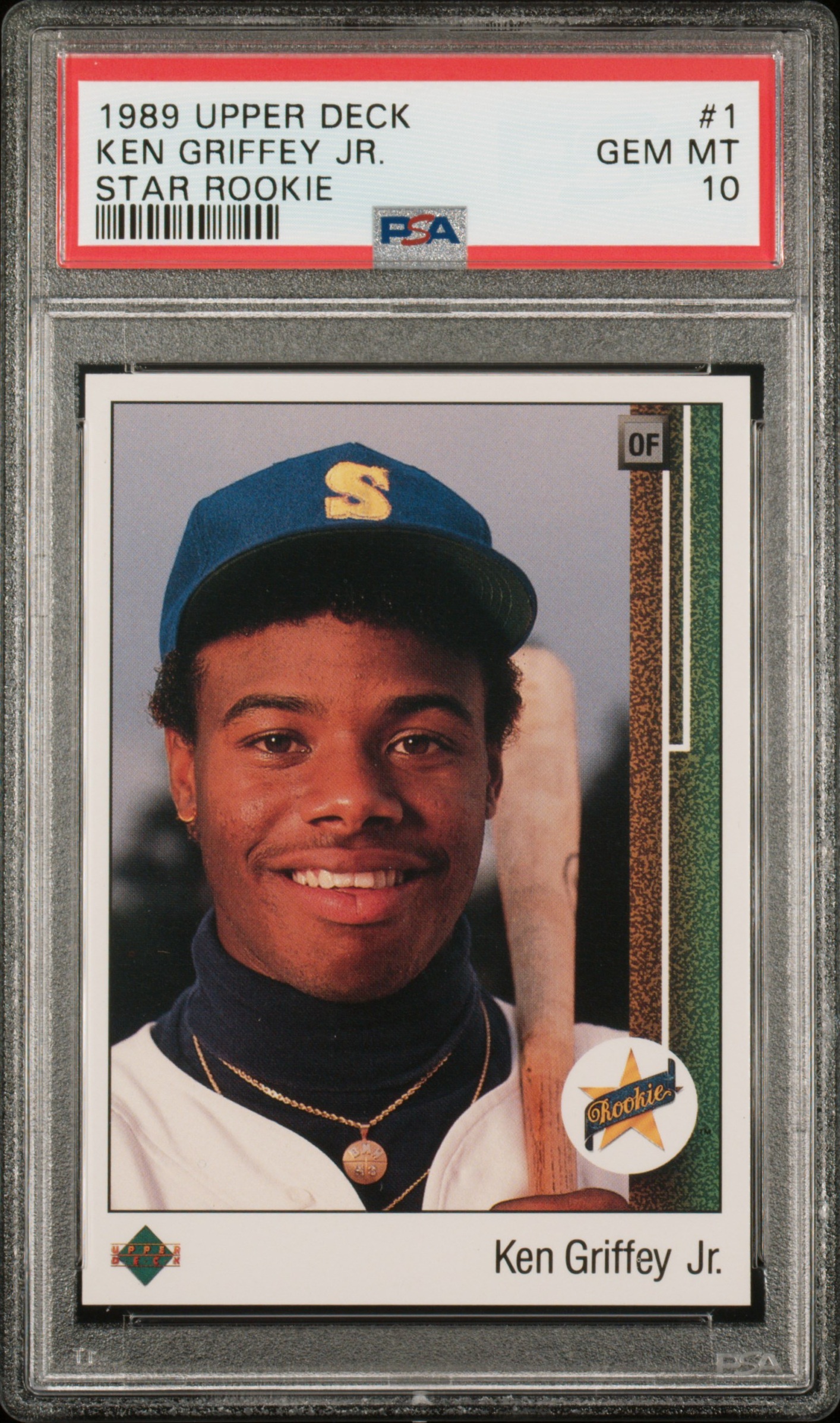
Ken Griffey Jr. - 1989 Upper Deck Baseball
Avg Sale
$5700
Sales
0
Grade
PSA 10
View in app →
Collection
Buy it because you love it
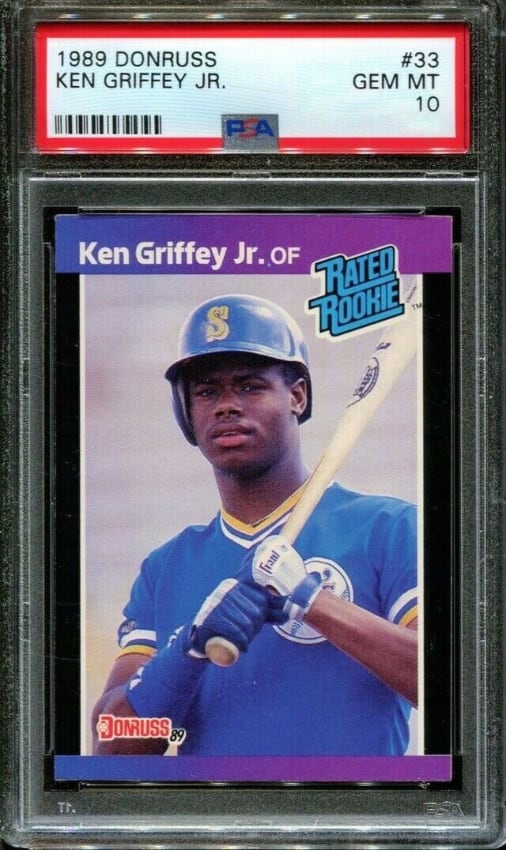
Ken Griffey Jr. - 1989 Donruss Baseball
Avg Sale
$1260
Sales
0
Grade
PSA 10
View in app →
Collection
Buy it because you love it
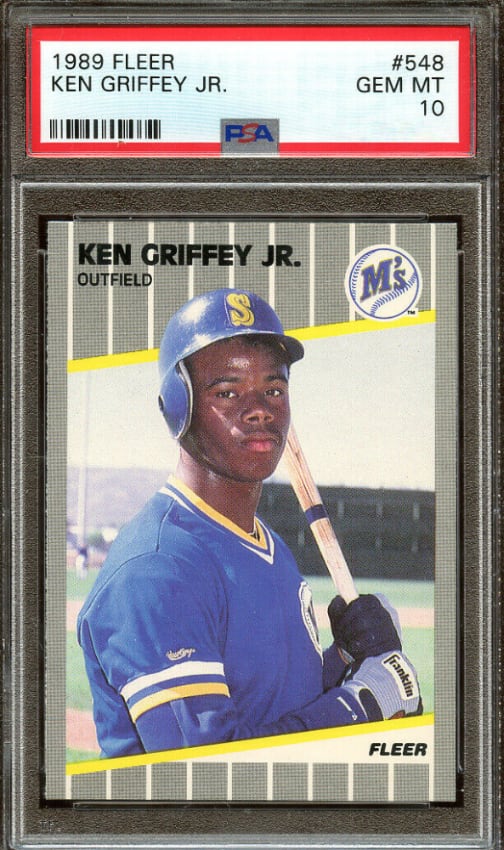
Ken Griffey Jr. - 1989 Fleer Baseball
Avg Sale
$338
Sales
0
Grade
PSA 10
View in app →
Collection
Buy it because you love it
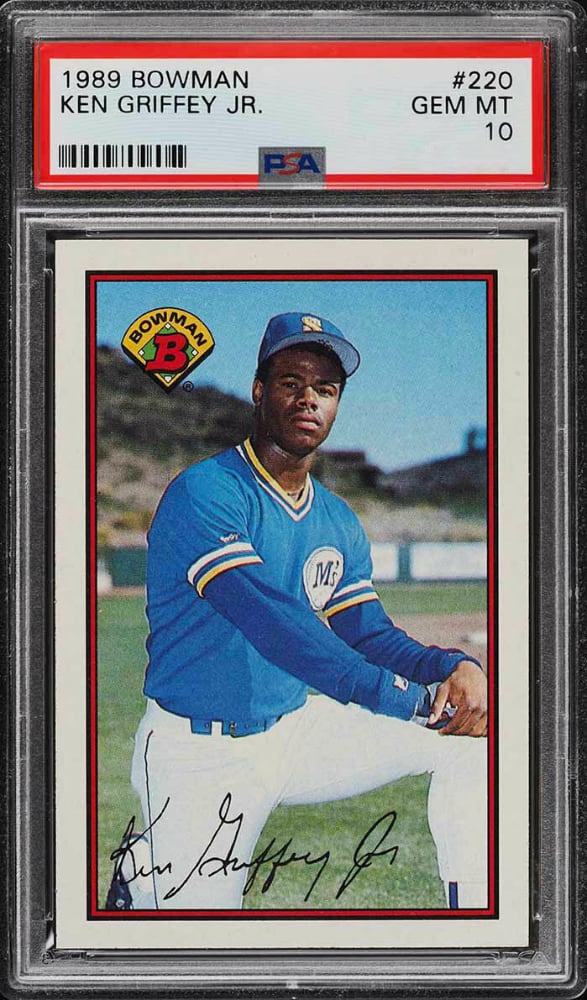
Ken Griffey Jr. - 1989 Bowman Baseball
Avg Sale
$721
Sales
0
Grade
PSA 10
View in app →
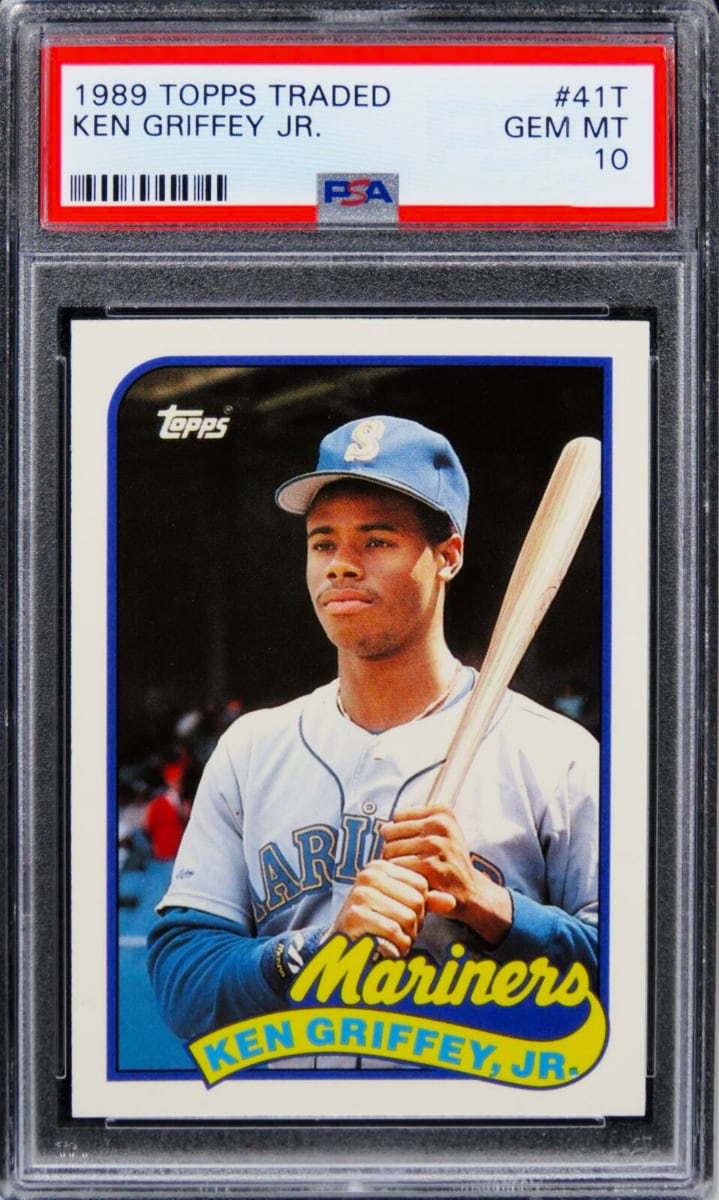
Collection
Buy it because you love it
Ken Griffey Jr. - 1989 Topps Traded Baseball
Avg Sale
$279
Sales
0
Grade
PSA 10
View in app →
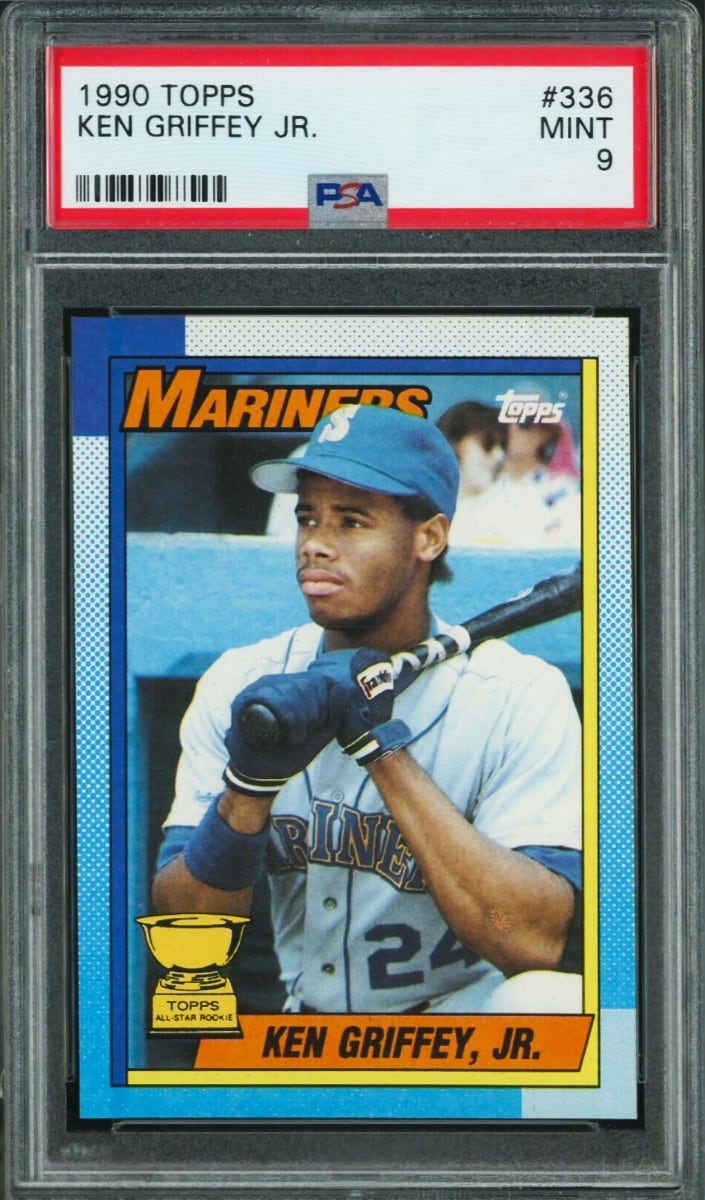
Collection
Buy it because you love it
Ken Griffey Jr. - 1990 Topps Baseball
Avg Sale
$1100
Sales
0
Grade
PSA 10
View in app →
The Legacy in Cardboard
Card number one in the first Upper Deck set ever produced. That is where the Ken Griffey Jr. story begins, and it is why his place in collecting history is unlike anyone else's. Griffey is not just a Hall of Famer — he is the player who made an entire generation fall in love with baseball cards. The combination of his effortless swing, charismatic personality, and the timing of his arrival during the late-1980s card boom means that Griffey cards carry an emotional weight that transcends pure investment logic.
That nostalgia is a market force. Collectors who grew up chasing Griffey rookies in the late '80s and early '90s are now established adults with disposable income, and many are returning to the hobby specifically to reclaim the cards they once owned. This generational demand creates a stable and growing market for high-grade Griffey cards.
Definitive Cards in the Collection
1989 Upper Deck #1 — This is arguably the most iconic modern baseball card ever produced. The first card in the first Upper Deck set, featuring a young Griffey in his Mariners uniform. PSA 10 copies have appreciated steadily for decades and remain one of the most recognized cards in the world.
1989 Bowman #220 — Often overlooked in favor of the Upper Deck, the Bowman rookie offers a more affordable entry point with strong upside. High-grade examples are becoming harder to find as more collectors pursue complete Griffey rookie sets.
1989 Donruss Rated Rookie #33 — The third member of the classic Griffey rookie trio. While not as valuable as the Upper Deck or Bowman, it completes the core set and carries its own nostalgic appeal for collectors who remember pulling it from wax packs.
When to Buy — and What to Watch For
Griffey's career stats are fixed, which removes the downside risk that comes with active players. His cards trade on nostalgia, Hall of Fame status, and the generational wave of collectors returning to the hobby with adult budgets. When you see a surge of "90s kids" content on social media or a nostalgia-driven documentary, that is your cue — buying activity tends to follow those cultural moments.
PSA and BGS population reports are critical for Griffey cards. The centering on 1989 Upper Deck cards is notoriously inconsistent, making true gem-mint copies scarcer than the raw supply suggests. Before you buy a raw copy hoping to grade it, study the centering carefully — if it grades well, you are getting a card worth significantly more than what you paid. That centering gap is where the best deals hide.
The Vintage Premium
The 1989 Upper Deck #1 occupies a singular position in the hobby — it is the bridge between true vintage collecting and the modern era. Produced on foil stock that was revolutionary for its time, the card introduced a new standard for quality while simultaneously creating the centering and chipping vulnerabilities that make gem-mint examples far scarcer than the massive print run would suggest. For collectors of vintage modern cards — the late 1980s and early 1990s window before mass overproduction fully took hold — Griffey's Upper Deck rookie is the undisputed king. Its dominance in that space means it functions less like a junk wax era card and more like a vintage cornerstone, appreciating steadily as the generation that grew up with it returns to the hobby with the means to buy what they could only dream of owning as kids.
Track the Legacy on Mantel
Centering on the 1989 Upper Deck is notoriously inconsistent, which means the gap between a raw card and a PSA 10 can be enormous — and knowing what each grade is actually selling for is the only way to avoid overpaying. Mantel's comps give you verified recent sales data broken down by grade and condition, so you can evaluate any Griffey listing against what the market is truly paying rather than what sellers hope to get. SLAM scores reveal whether a Griffey card is seeing genuine buying activity or just being relisted at higher prices without takers. Live listings from eBay are aggregated into one searchable feed so you can search across products, grades, and price points without bouncing between platforms. Set up your Wish List to get notified when a specific Griffey card surfaces at your target price, and join the community of collectors who share their 1989 Upper Deck pulls, swap centering stories, and track what the hobby is chasing across his extensive junk wax and insert catalog.
Whether you are reliving the '90s by rebuilding the collection you had as a kid or pursuing a high-grade registry set, Mantel gives you the comps, the velocity data, and the collector community to make every Griffey purchase with confidence.
Join the Ken Griffey Jr Cards Community
Share your collection, compare comps, browse live marketplace listings, track trends, and connect with collectors who care about the hobby and the market behind every card.
Guides & Resources
What Is a SLAM Score? →
Learn how SLAM scores rate card market activity from 0-100 and what the four score tiers mean.
How to Start Collecting Sports Cards →
A complete guide to card types, grading, buying, selling, and building your collection.
What Do Card Grades Mean? →
Learn what PSA 10, BGS 9.5, and other grades actually mean for card value and condition.
What's the Difference Between PSA, Beckett, SGC, CGC? →
Compare the major grading services and understand which one is right for your cards.
How to Get a Card Graded →
Step-by-step guide to submitting your cards for professional grading.
How to Get Cards Graded at the Show →
Tips for on-site grading submissions at card shows and conventions.
How to Protect Your Cards →
Best practices for sleeves, toploaders, and long-term card storage.
10 Tips for Navigating a Card Show →
Make the most of your next card show with these practical tips.
Sports Card Collectors Glossary of Terms →
From "hit" to "RPA" — a complete glossary of the hobby's most common terms.
Explore More Categories
Related
Baseball Rookie CardsBowman Chrome Baseball CardsBaseball Prospect CardsBaseball Autograph CardsVintage Baseball CardsTopps Baseball CardsTopps Chrome Baseball CardsSports
Baseball CardsFootball CardsBasketball CardsHockey CardsSoccer CardsWrestling CardsGolf CardsMMA CardsRacing CardsTennis CardsOlympics Cards