Mickey Mantle Cards: The Holy Grail of Baseball Collecting
No name carries more weight in the hobby than Mickey Mantle. His 1952 Topps is the most famous baseball card ever made.
From the Community
Related posts from the Baseball Cards community on Mantel


Join the Mickey Mantle Cards Community
Share your collection, compare comps, browse live marketplace listings, track trends, and connect with collectors who care about the hobby and the market behind every card.
SLAM Scores & Marketplace
SLAM is a liquidity score from 0–100 that measures how easily a card can be bought or sold at a fair price. It combines recent sales data, trading volume, and market depth into a single number. Listings are aggregated from eBay and Fanatics Collect.
90–100 Cash
70–89 Liquid
40–69 Inventory
0–39 Collection
Collection
Buy it because you love it
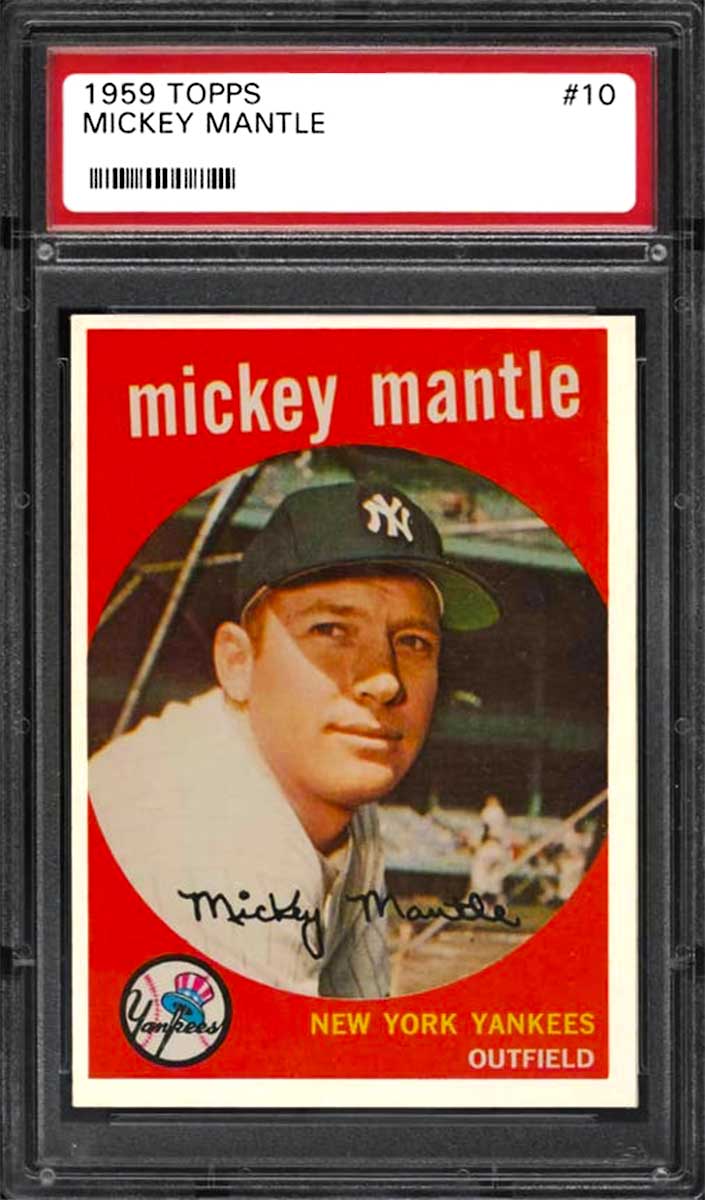
Mickey Mantle - 1959 Topps Baseball
Avg Sale
$91500
Sales
0
Grade
PSA 9
View in app →
Collection
Buy it because you love it
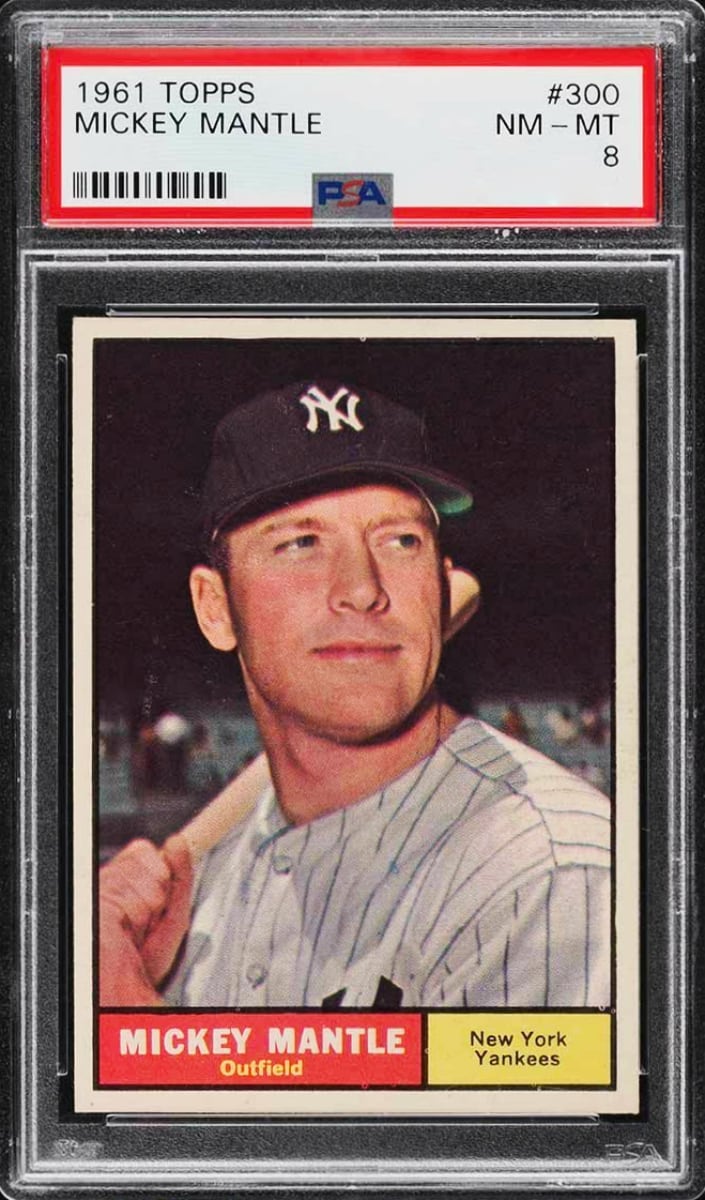
Mickey Mantle - 1961 Topps Baseball
Avg Sale
$3650
Sales
0
Grade
PSA 9
View in app →
Collection
Buy it because you love it
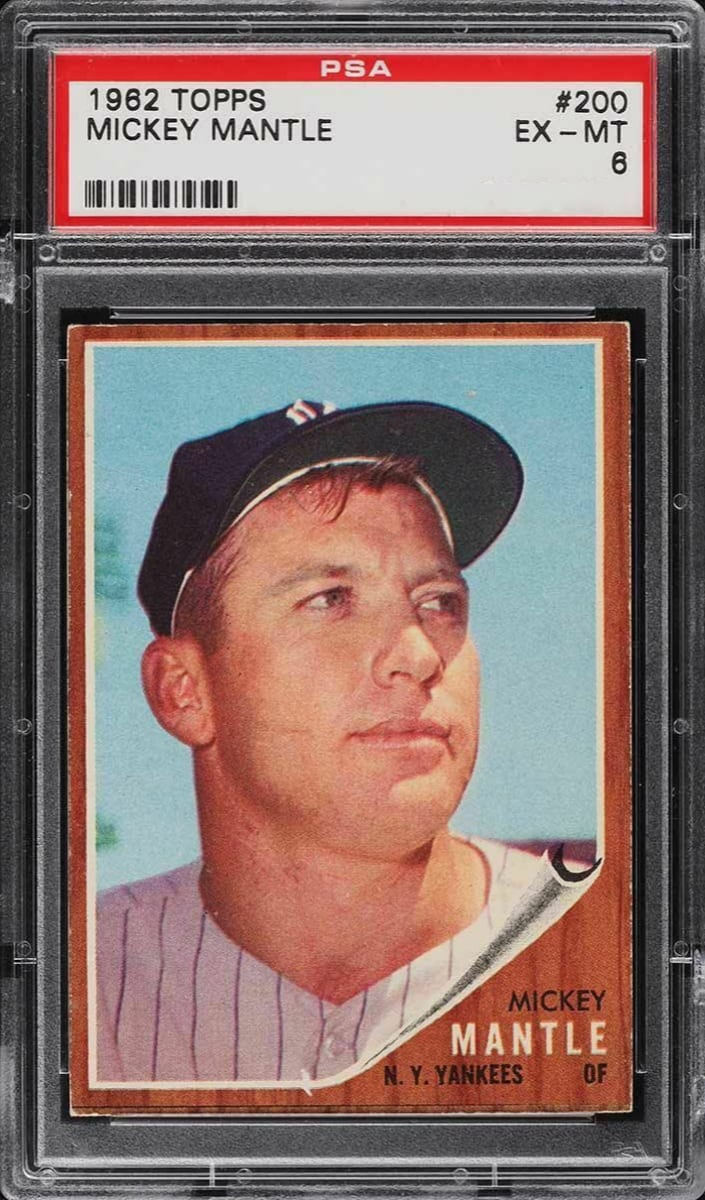
Mickey Mantle - 1962 Topps Baseball
Avg Sale
$300
Sales
0
Grade
PSA 10
View in app →
Collection
Buy it because you love it
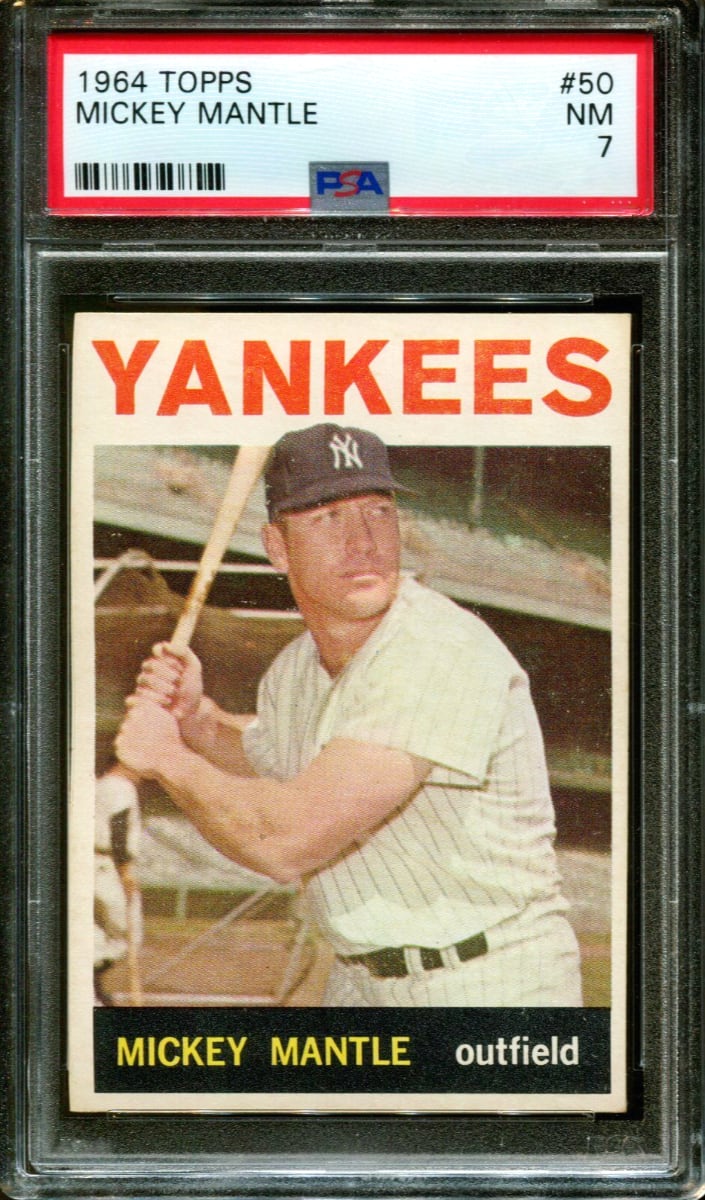
Mickey Mantle - 1964 Topps Baseball
Avg Sale
$38500
Sales
0
Grade
PSA 9
View in app →
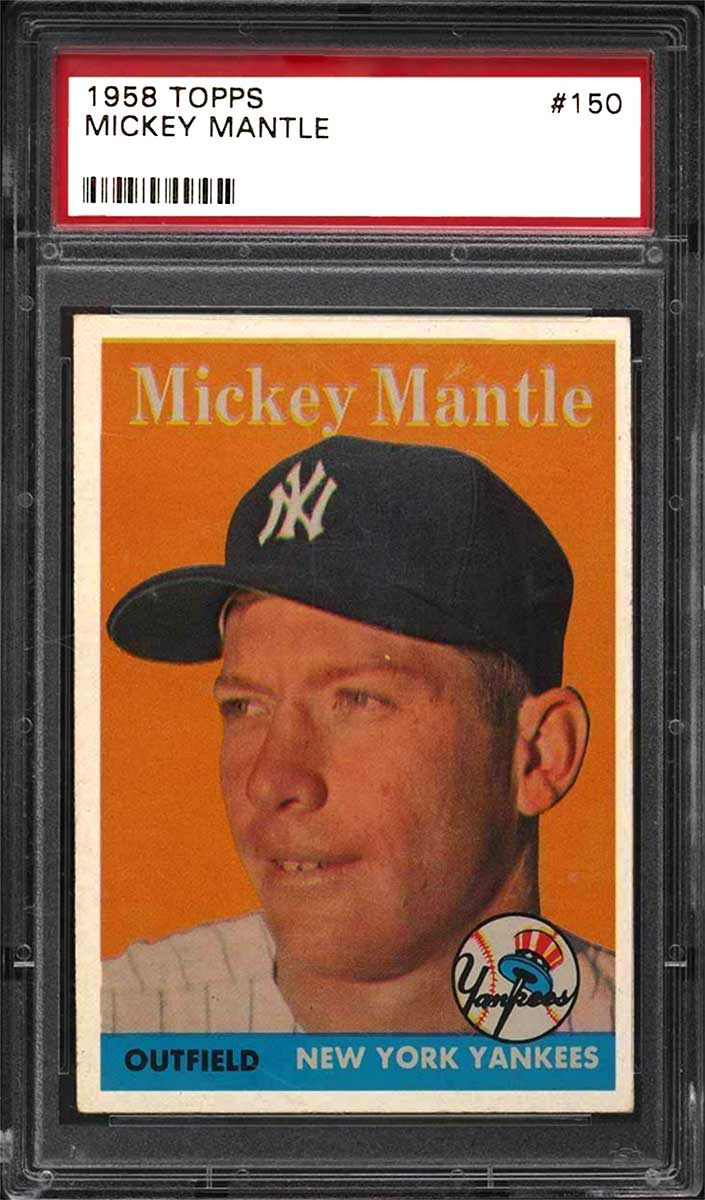
Collection
Buy it because you love it
Mickey Mantle - 1958 Topps Baseball
Avg Sale
$38100
Sales
0
Grade
PSA 9
View in app →
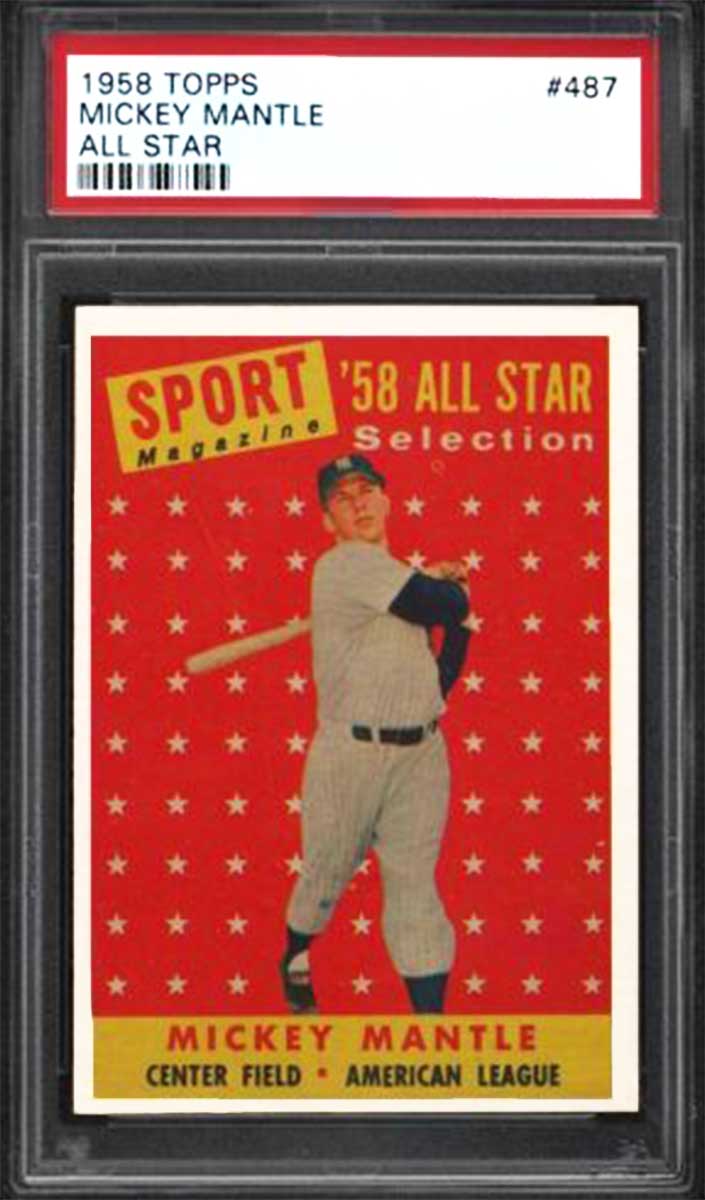
Collection
Buy it because you love it
Mickey Mantle - 1958 Topps Baseball
Avg Sale
$11704
Sales
0
Grade
PSA 9
View in app →
The Legacy in Cardboard
The 1952 Topps Mickey Mantle has sold for millions of dollars. That single data point tells you everything about the weight this name carries in the hobby. Mantle cards are not merely collectibles — they are the foundation of vintage baseball card collecting, the benchmark against which all other cards are measured, and for many collectors the ultimate trophy piece that defines a collection's seriousness. No player before or since has occupied quite the same position at the intersection of baseball history and hobby culture.
What makes Mantle cards unique is their cross-generational appeal. Older collectors grew up watching him play. Younger collectors recognize his cards as the ultimate trophy pieces. Institutional buyers and investors view high-grade Mantle cards as alternative assets with a proven track record of appreciation. This combination of emotional and financial demand creates a market unlike any other in the hobby.
Definitive Cards in the Collection
1952 Topps #311 — The holy grail of baseball cards. This is the card that defines the entire hobby. Originally a high-number short print, the 1952 Topps Mantle has sold for millions of dollars in top grades. Even lower-grade examples carry significant five- and six-figure values. Owning one in any condition is a milestone for serious collectors.
1951 Bowman #253 — Mantle's true rookie card, issued during his actual rookie season. The 1951 Bowman is scarcer than many collectors realize and has appreciated steadily as the market increasingly recognizes it as the first Mantle card ever produced.
1953 Topps #82 and 1956 Topps #135 — These mid-1950s issues offer strong alternatives for collectors who want Mantle representation without the extreme price tags of the 1951 and 1952 cards. Both feature classic designs and trade actively in the vintage market.
When to Buy — and What to Watch For
High-grade Mantle cards get rarer every year as the surviving population gets absorbed into long-term collections. When a major auction result sets a new record, it pulls the entire market upward — so if you are eyeing a specific card, try to buy before the next headline sale resets expectations. The best buying windows tend to come between major auction cycles when fewer eyes are on the vintage market.
Authentication and grading matter more here than almost anywhere else in the hobby. The difference between a PSA 3 and a PSA 5 can be tens of thousands of dollars, and the risk of alterations or trims makes buying from trusted sources essential. Before any purchase, study the eye appeal, centering, and surface quality at the grade level you are targeting — and always verify authenticity through a reputable grading service.
The Vintage Premium
Pre-war and vintage card collecting carries a scarcity dynamic that modern cards simply cannot replicate. Every year, the surviving population of high-grade Mantle cards shrinks as more copies are absorbed into permanent collections, damaged, or lost entirely. Unlike modern parallels where the exact print run is known and supply is fixed at production, the effective supply of vintage Mantle cards decreases over time — a structural advantage that no post-1980 card can claim. Condition scarcity compounds this effect: centering, surface preservation, and corner integrity on seventy-year-old cardboard are the result of decades of handling and storage, making each grading point exponentially harder to achieve. A PSA 7 Mantle from 1952 is not just a card — it is a survivor, and the market prices that survival accordingly.
Track the Legacy on Mantel
The difference between a PSA 3 and a PSA 5 on a 1952 Topps Mantle can be tens of thousands of dollars, and in a market where alterations and trims are real risks, knowing what specific grades are actually selling for is the difference between a smart buy and an expensive mistake. Mantel's comps show you verified recent sales at every grade level so you can evaluate any Mantle listing against real transaction data — not inflated asking prices that sit unsold for months. SLAM scores measure actual sales velocity and liquidity, which is especially valuable for vintage cards where a listing can linger without any genuine buying interest behind it. Live listings from eBay are aggregated into one searchable feed so you can monitor the entire Mantle market without switching platforms. Set up your Wish List to get notified when a specific card surfaces at a price you are willing to pay, and join the community of vintage collectors who share pickups, discuss authentication concerns, and track market trends across the 1950s and 1960s Topps and Bowman catalogs.
Owning a Mantle card is owning a piece of baseball history. Mantel gives you the comps, the transaction data, and the collector community to pursue that history with confidence — whether you are saving for the 1952 Topps holy grail or building a complete run across every year of his career.
Join the Mickey Mantle Cards Community
Share your collection, compare comps, browse live marketplace listings, track trends, and connect with collectors who care about the hobby and the market behind every card.
Guides & Resources
What Is a SLAM Score? →
Learn how SLAM scores rate card market activity from 0-100 and what the four score tiers mean.
How to Start Collecting Sports Cards →
A complete guide to card types, grading, buying, selling, and building your collection.
What Do Card Grades Mean? →
Learn what PSA 10, BGS 9.5, and other grades actually mean for card value and condition.
What's the Difference Between PSA, Beckett, SGC, CGC? →
Compare the major grading services and understand which one is right for your cards.
How to Get a Card Graded →
Step-by-step guide to submitting your cards for professional grading.
How to Get Cards Graded at the Show →
Tips for on-site grading submissions at card shows and conventions.
How to Protect Your Cards →
Best practices for sleeves, toploaders, and long-term card storage.
10 Tips for Navigating a Card Show →
Make the most of your next card show with these practical tips.
Sports Card Collectors Glossary of Terms →
From "hit" to "RPA" — a complete glossary of the hobby's most common terms.
Explore More Categories
Related
Baseball Rookie CardsBowman Chrome Baseball CardsBaseball Prospect CardsBaseball Autograph CardsVintage Baseball CardsTopps Baseball CardsTopps Chrome Baseball CardsSports
Baseball CardsFootball CardsBasketball CardsHockey CardsSoccer CardsWrestling CardsGolf CardsMMA CardsRacing CardsTennis CardsOlympics Cards